The lift is done. The truck sits taller, the tires fill the wells the way you pictured, and the drive home down Pepperell Parkway feels like a different vehicle. That is the fun part, and it is also the part most articles stop at.
Here is the thing nobody tells you in the parking lot: a lift kit installation in Opelika AL is not the end of a project. It is the start of a maintenance clock. New hardware seats. Springs and torsion bars settle. Taller, heavier tires begin loading steering and brake parts in ways the factory engineers never planned for. The truck you drive off in is not geometrically identical to the truck you will have a month from now.
So instead of another buying guide, here is the ownership timeline for lifted truck maintenance in Opelika: what happens next, when it happens, and what to listen for in between.
The Clock Starts the Day You Drive Off
Every bolt on that kit was torqued to a number. Every alignment angle was set to a spec. Both were true at the moment the truck came off the lift.
Then you started driving. Fasteners seat into their mating surfaces. Bushings compress. New springs take a set. According to Superlift’s own published installation instructions, the final step of a proper install is to put the truck on the floor, cycle the steering lock to lock, and inspect the tires, wheels, steering, suspension and brake systems for proper operation, tightness and adequate clearance. That check happens on install day, with the truck standing still.
What it cannot do is predict what a few hundred miles of Lee County pavement will change. Stop-and-go on Frederick Road works the truck differently than a gravel drive out toward Beauregard, and both are different again from a daily run up I-85 to Auburn. That is why lifted truck maintenance in Opelika is a schedule, not a single visit.
Stop One: The First Few Hundred Miles After Your Lift Kit Installation in Opelika AL
This is the visit people skip, and it is the one with the most safety riding on it.
Lug nuts come first. Most wheel manufacturers recommend lug nuts be re-torqued at 250 miles after a new wheel and tire installation, according to published installer guidance. Superlift is blunter about it: retighten lug nuts at 500 miles after any wheel change, or any time the lug nuts are loosened, because failure to do so could cause wheels to come off. If you got new wheels along with the lift, you are on the earlier clock, not the later one.
Then the suspension hardware. Published installer guidance says lift kit manufacturers recommend all suspension lift kit components, including leveling kits, be re-torqued at 500 miles, 1,500 miles and 3,000 miles. That first re-torque catches hardware which has relaxed as it seated.
Then clearance, with the truck on its own weight. Brake lines, ABS wiring, tire-to-fender and tire-to-frame clearance all get re-checked. Things that cleared on a hoist with the suspension drooping can rub once the truck is sitting on the ground and turning lock to lock in a real parking lot.
A suspension shop’s post-lift guidance puts it plainly: reinspecting all bolts and connections is essential after the initial installation and again after a few hundred miles. For most drivers around Opelika, Auburn and Smiths Station, that lands two or three weeks after pickup, so put a shop near you on the calendar before you forget.
Stop Two: The Settle-In Truck Alignment After a Lift Kit in Opelika AL
Alignment on a lifted truck is a two-visit job. This is the single most misunderstood item on the whole list.
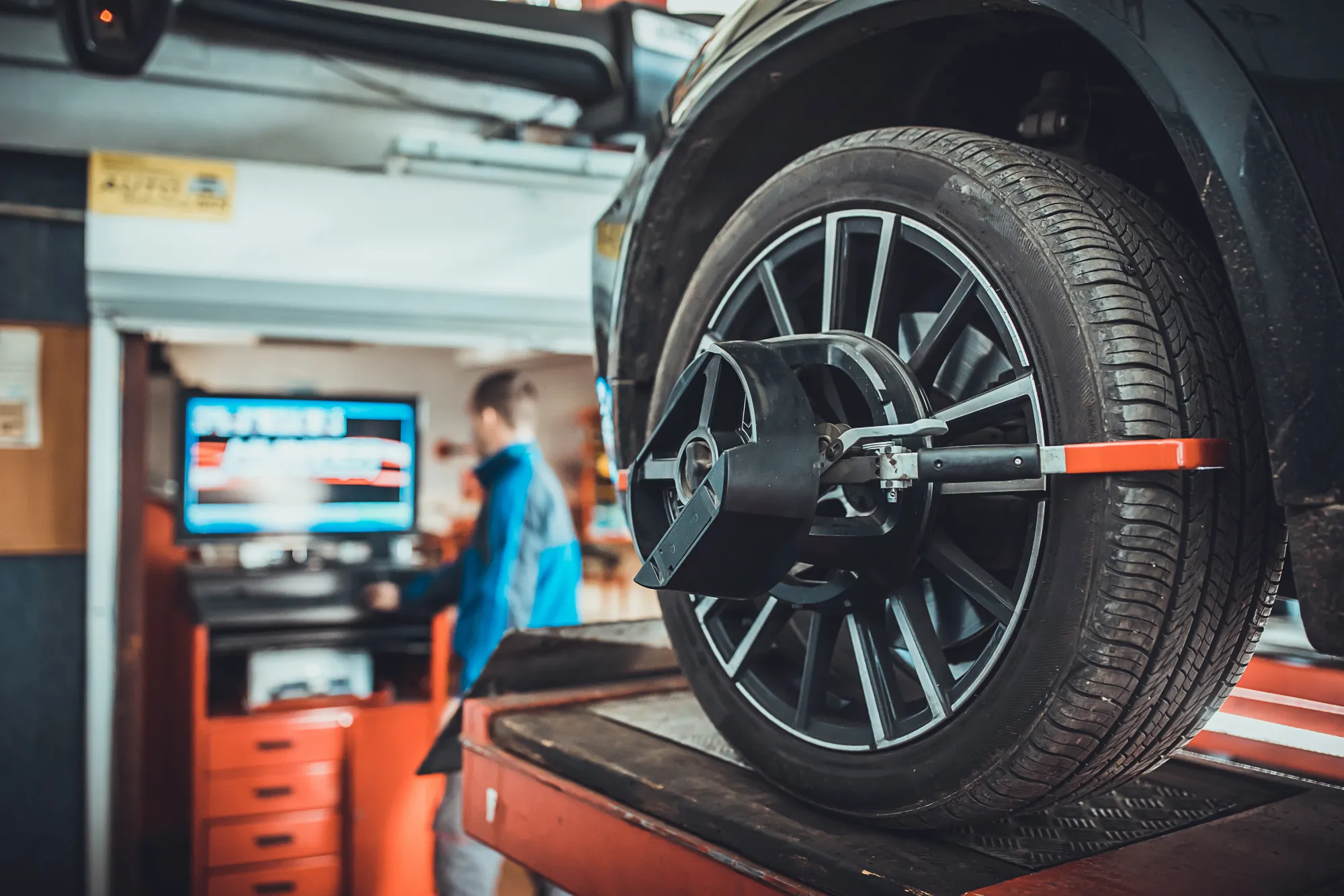
Superlift’s instructions state flatly that front end realignment is necessary after installing the system, and step 13 tells the installer to realign the vehicle to factory specifications and to write down the ride height measurement at the time of that alignment. That measurement is not busywork. It exists because ride height and alignment angles are joined at the hip.
Now read what the same instructions say about later: if misalignment occurs in the future due to the torsion bars settling excessively, alignment can be restored by adjusting the bars back up to their original ride height. The manufacturer is naming settling as a cause of misalignment down the road, in the document that ships in the box.
Here is what that looks like in your driveway. The truck felt perfect leaving the shop. About a month later the steering wheel sits a few degrees off center on a straight stretch of Highway 280, or the truck drifts a hair to one side. Nothing broke. The springs settled, ride height dropped slightly, and the angles set on install day no longer match the truck’s stance.
Post-lift guidance from a suspension shop says settling typically occurs within the first few hundred miles, after which a follow-up inspection and alignment check are recommended. A settle-in check is not the shop finding something wrong with the first alignment. It is the second half of a job that could only be finished after the truck had driven on it.
Stop Three: The 1,500 and 3,000 Mile Hardware Checks
The published re-torque pattern is 500, 1,500 and 3,000 miles, and there is a second reason to honor it beyond safety. Installer guidance notes that keeping up with those re-torques also helps keep your kit’s warranty valid. If a control arm bushing or a track bar fails at 8,000 miles and you have no record of the scheduled re-torques, that is a conversation you would rather not have.
Each visit is quick and gets more boring, which is the point. Fasteners get checked against spec. Bushings get looked at for cracking or walking out of their sleeves. Shocks get checked for leaks. Tires get read for the wear pattern that tells on an alignment before you can feel it in the steering wheel.
The Parts That Now Wear on a Different Clock
Lifting a truck and putting taller, heavier tires under it changes more than how it looks. It changes the load path through a set of parts that were sized for stock geometry and stock tires.
Ball joints and tie rod ends. These carry the steering loads. A bigger, heavier tire is a longer lever on every one of them, and every parking-lot turn asks more of the joint than it used to. They do not fail on a schedule. They fail on a load history, and yours just changed.
U-joints and driveshaft angles. This one has a real engineering number attached. Dana’s Spicer engineering guidance states that for vibration-free performance, universal joint operating angles should not be larger than three degrees, and that any U-joint operating angle greater than three degrees will lower U-joint life and may cause a vibration. Spicer also specifies that the angles at each end of a driveshaft should always be at least one-half degree, and should be equal within one degree of each other. Lifting the body away from the axles is, by definition, a change to those angles, which is why a new vibration on a lifted truck is worth reporting instead of living with.
Bushings, track bars and wheel bearings. Same story: more mass, more load, more heat cycles. Post-lift guidance specifically calls out checking for worn bushings or leaking shocks during regular maintenance.
If a part on this list is worn, the fix is far less trouble than what it turns into if you wait. For a current number on any of it, ask us for a quote rather than guessing from something you read online, because parts and labor pricing moves.
Your Brakes Are Working Against a Longer Lever
Your brakes did not get any bigger when your tires did.
A brake engineering guide explains it in two parts. First, mass: a larger or heavier wheel-and-tire assembly requires more energy to accelerate, and it requires more braking energy to slow down. Second, geometry: taller tires increase the distance between the axle centerline and the road, and that larger radius creates more leverage against the brakes. Your brakes are fighting a longer wrench than they were designed for.
The same guide lists what that feels like from the driver’s seat: longer stopping distances, faster heat buildup during repeated braking, and brake fade on long grades or after several hard stops.
The practical version for an East Alabama truck owner: the brakes feel fine running errands around Opelika, and then you take a loaded trailer down a long grade and they go soft and smell hot near the bottom. That is the brakes telling you the math changed. The habits in our guide to making your brakes last longer matter even more now.
What to Listen and Feel For Between Visits
Post-lift guidance says to listen for unusual noises or vibrations and to watch that the vehicle tracks straight. Here is how to translate what you notice into what to ask for:
- A vibration at one specific speed on the interstate, absent around town, that does not change when you brake. That is a driveline angle or U-joint symptom rather than a brake or tire problem. Ask for a driveline angle check.
- A single clunk over railroad crossings and driveway aprons, always in the same direction of travel. Points at a fastener that has relaxed, or a wear part with new play in it. Ask for a hardware re-torque and a suspension inspection.
- Steering wheel drifting off center, or a light pull. The settle-in alignment story above. Ask for an alignment check with ride height measured.
- Feathering or an inside-edge wear band on the front tires, well before your rotation is due. Alignment, and the sooner the better. If the damage is done, our post on tire repair versus replacement walks through the call.
- Brakes that go soft or smell hot after a long descent or repeated hard stops. Brake inspection.
- New steering wander on the highway that was not there last month. Steering linkage inspection.
None of these mean the lift was done wrong. They are the normal vocabulary of a lifted truck, and catching them early is the difference between a wear part and a tow back to Opelika.
Folding Lifted Truck Maintenance in Opelika Into Your Normal Rhythm
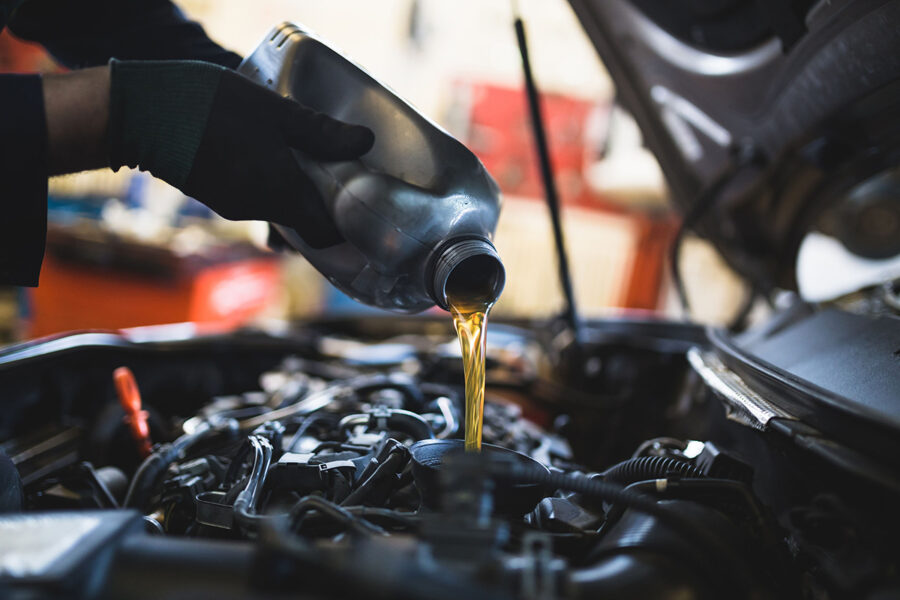
After the first few thousand miles, you do not need a separate calendar for any of this. Attach it to visits you already make. When the truck goes in for a tire rotation, ask for a look at the suspension hardware and the tire wear pattern at the same time. When it comes in for an oil change, that is a fine moment for a quick look underneath.
Alabama has no suspension lift limits, no frame height limitations and no bumper height restrictions in its laws, so nobody is going to make you bring the truck in. On a lifted truck in Lee County, the schedule is entirely on the owner, which is the best argument there is for tying it to appointments you already keep.
Getting a Current Number Before You Book
You have probably noticed there are no prices anywhere in this post, and that is on purpose. Parts and labor pricing changes faster than a blog post can keep up with, and a stale number is worse than no number at all.
A first re-torque visit, a settle-in truck alignment after a lift kit in Opelika AL, a set of tie rod ends, a brake inspection on a truck running big tires: for any of it, get a current quote from us rather than working from a figure you found somewhere online. Tell us what is on the truck and what you are noticing, and you will get a real number for your truck.
The Short Version
A lift is not a one-time transaction. It is a truck that now keeps a slightly different schedule than it did before, and the schedule is not complicated:
- Come back in the first few hundred miles for lug nuts, hardware re-torque and a clearance check.
- Come back for a settle-in alignment once the springs have taken their set.
- Hit the 1,500 and 3,000 mile hardware checks, and keep the paperwork for your warranty.
- From then on, fold suspension, steering, driveline and brake inspections into the tire rotations and oil changes you are already doing.
- Report new noises and vibrations early, while they are still small.
Do those five things and the lift stays exactly what you wanted it to be. Skip them and it slowly becomes a list of worn parts.
We take care of trucks all over Opelika, Auburn and the rest of Lee County, and we would rather see yours for a quick hardware check than for a tow. Schedule an appointment today and let’s get your lifted truck on the right schedule.